
The 3 Systems Every Business Needs to Stop Losing Leads
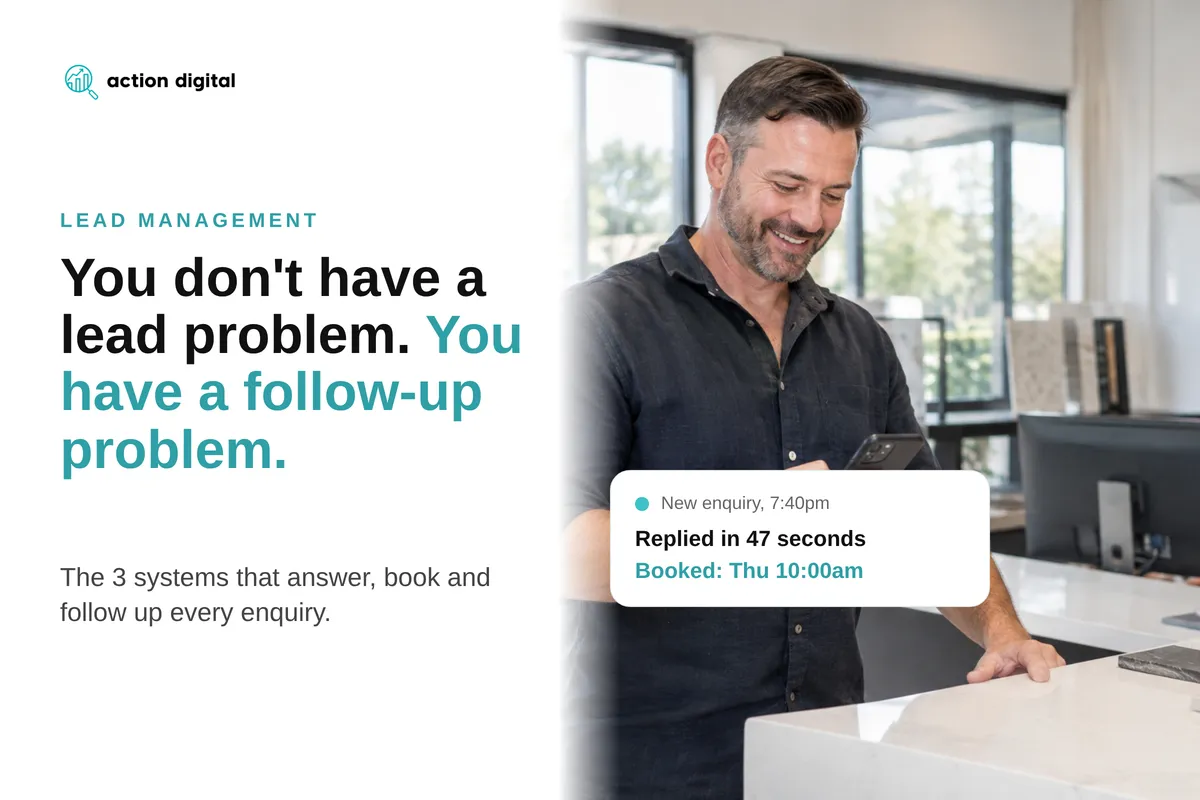
You paid for the click. The ad worked. Someone filled in your form at 7:40pm on a Tuesday.
Then nothing happened until Wednesday afternoon. By then they'd already booked someone else.
Most businesses don't have a lead problem. They have a lead management problem. The enquiries are coming in. They're just leaking out before anyone gets to them.
This article covers where the leaks are, what they cost, and the 3 systems that plug them.
The short version
- Speed wins. Contact a lead within 5 minutes and you're far more likely to qualify them than if you wait 30.
- Customers expect it now. 59% of Australians think 30 minutes is the longest reasonable wait for a first reply.
- Your enquiries leak in 4 places: capture, follow-up, recording and reporting.
- 3 systems fix it: an instant reply to every new lead, a website assistant that works after hours, and a follow-up system for every lead that didn't book.
- Every unbooked lead is still worth money, if something keeps the conversation going.
Where the leads go missing
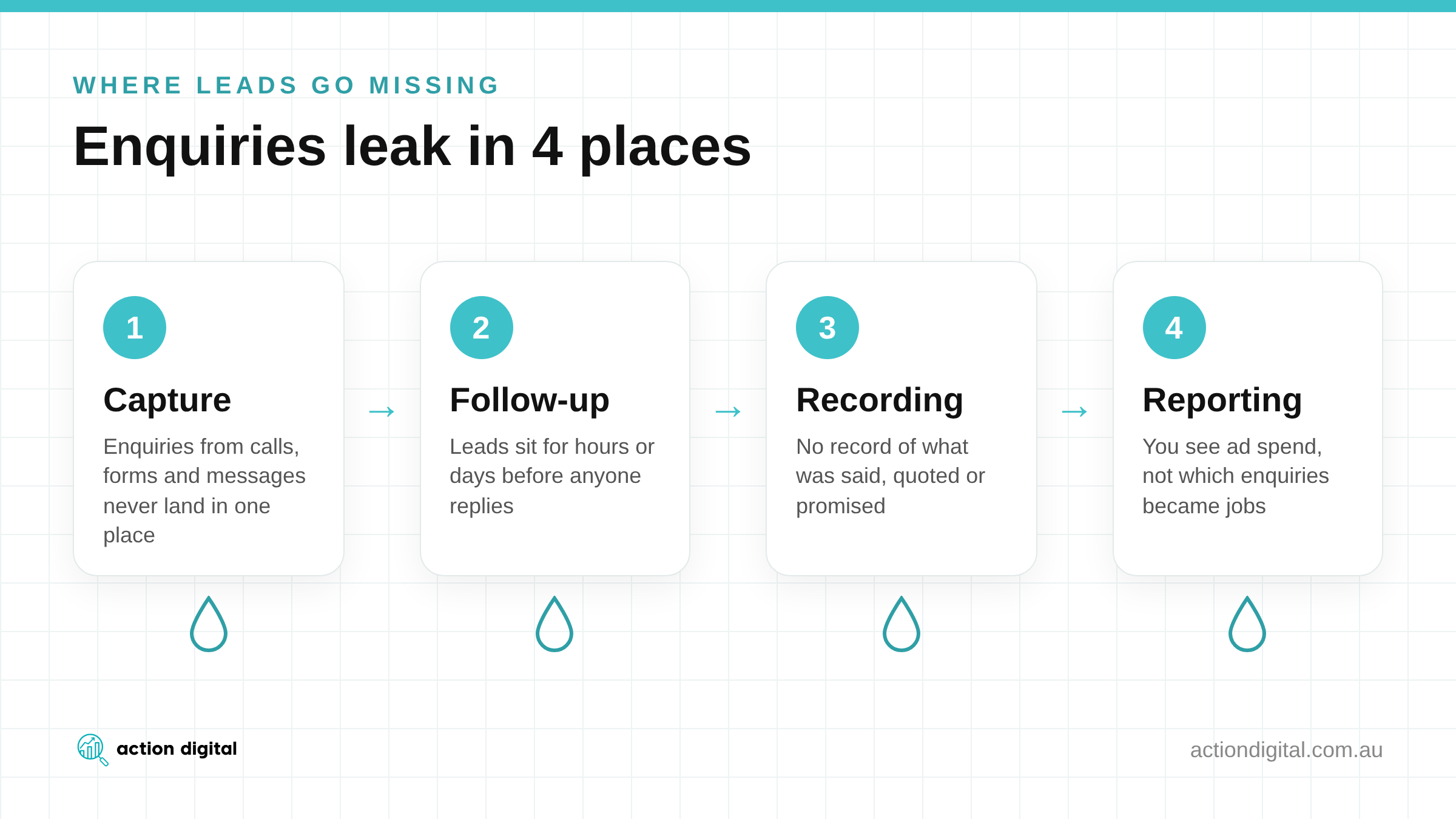
When we look at how a business handles its enquiries, the leaks almost always fall into 4 places.
1. Capture. Enquiries come in from ads, forms, phone calls, Facebook messages and walk-ins. Some of them never make it into one place. A missed call with no voicemail is a lead you'll never know you had. (Here's how those missed calls add up.)
2. Follow-up. The lead is captured, but it sits. Hours, sometimes days. The person behind the form doesn't wait. They ring the next business on Google.
3. Recording. Nobody has a clear record of what was said, what was quoted or what was promised. When a lead goes quiet, nobody knows where it was up to.
4. Reporting. You can see how much you spent on ads. You can't see how many enquiries turned into appointments, how many showed up, and how many became paying jobs. Without that, you can't tell which part is broken. (More on that in how long marketing takes to work.)
Why speed matters so much
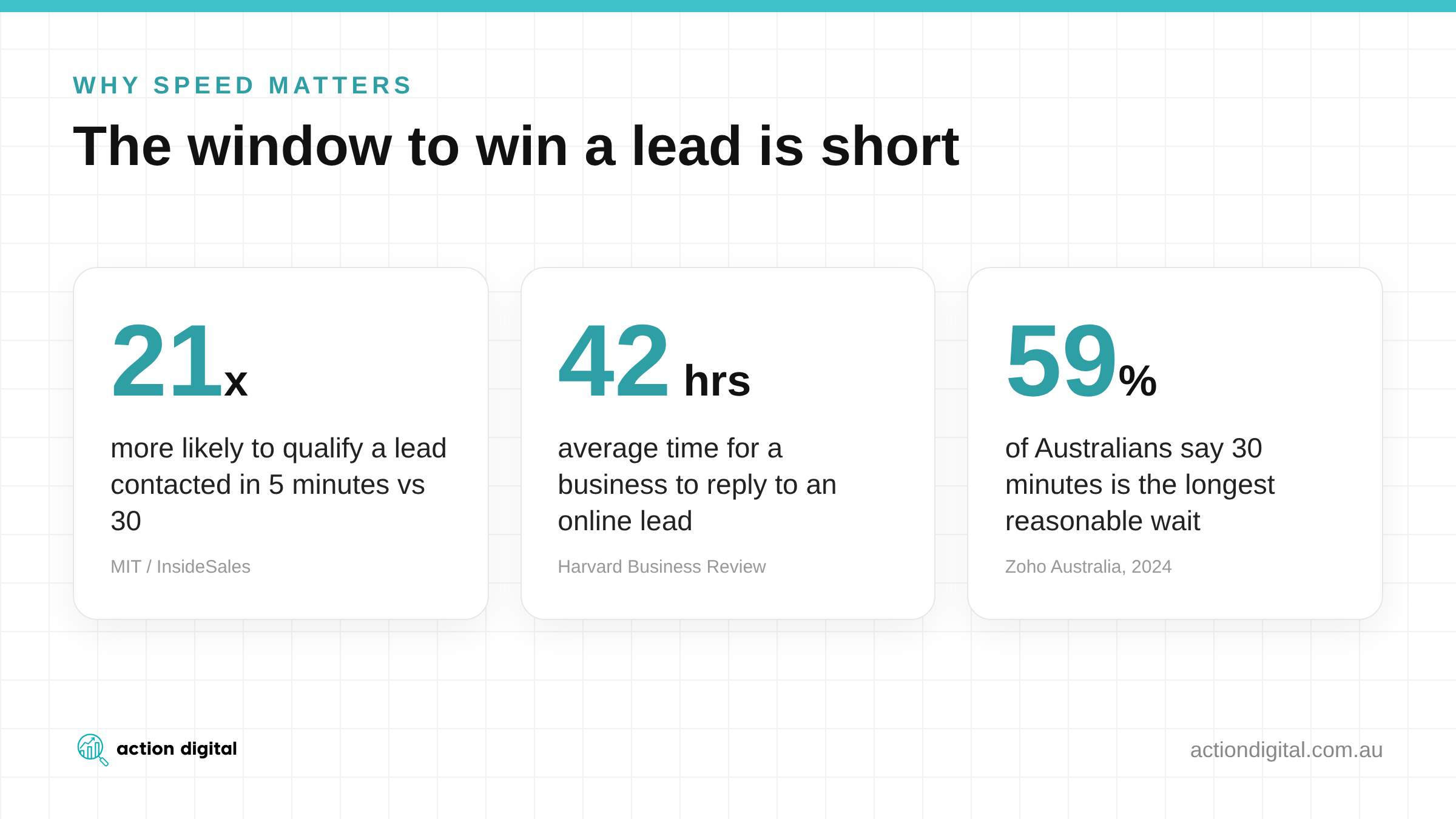
The best-known research on this comes from the Lead Response Management Study by MIT and InsideSales. It found that contacting a lead within 5 minutes made them 21 times more likely to qualify than contacting them after 30 minutes.
Harvard Business Review audited over 2,000 companies and found the average response time to an online lead was 42 hours. Almost a quarter never responded at all.
Australian customers aren't any more patient. In Zoho's 2024 survey of 401 Australians, 22% expected an instant reply, and 59% said 30 minutes was the most they'd reasonably wait.
So the window is short. And most businesses miss it, not because they don't care, but because they're on a job, on the tools, in a meeting or asleep.
What it costs you
Here's a simple way to think about it.
Say you get 100 enquiries a month and your average job is worth $5,000. If you win 5 of them, that's $25,000.
The other 95 aren't nothing. Some were never a fit. But some were good leads that went cold because nobody got back to them fast enough, or nobody followed up when they said "not right now".
You don't need to win all of them. Win one extra job a month and that's $60,000 a year, from enquiries you're already paying for.
5% of enquiries become jobs
That's the real game as a business owner:
- Get better quality enquiries
- Convert more of them at every step (lead to appointment, appointment to show, show to sale)
- Keep working the ones that didn't convert, because they're still an asset
The 3 systems
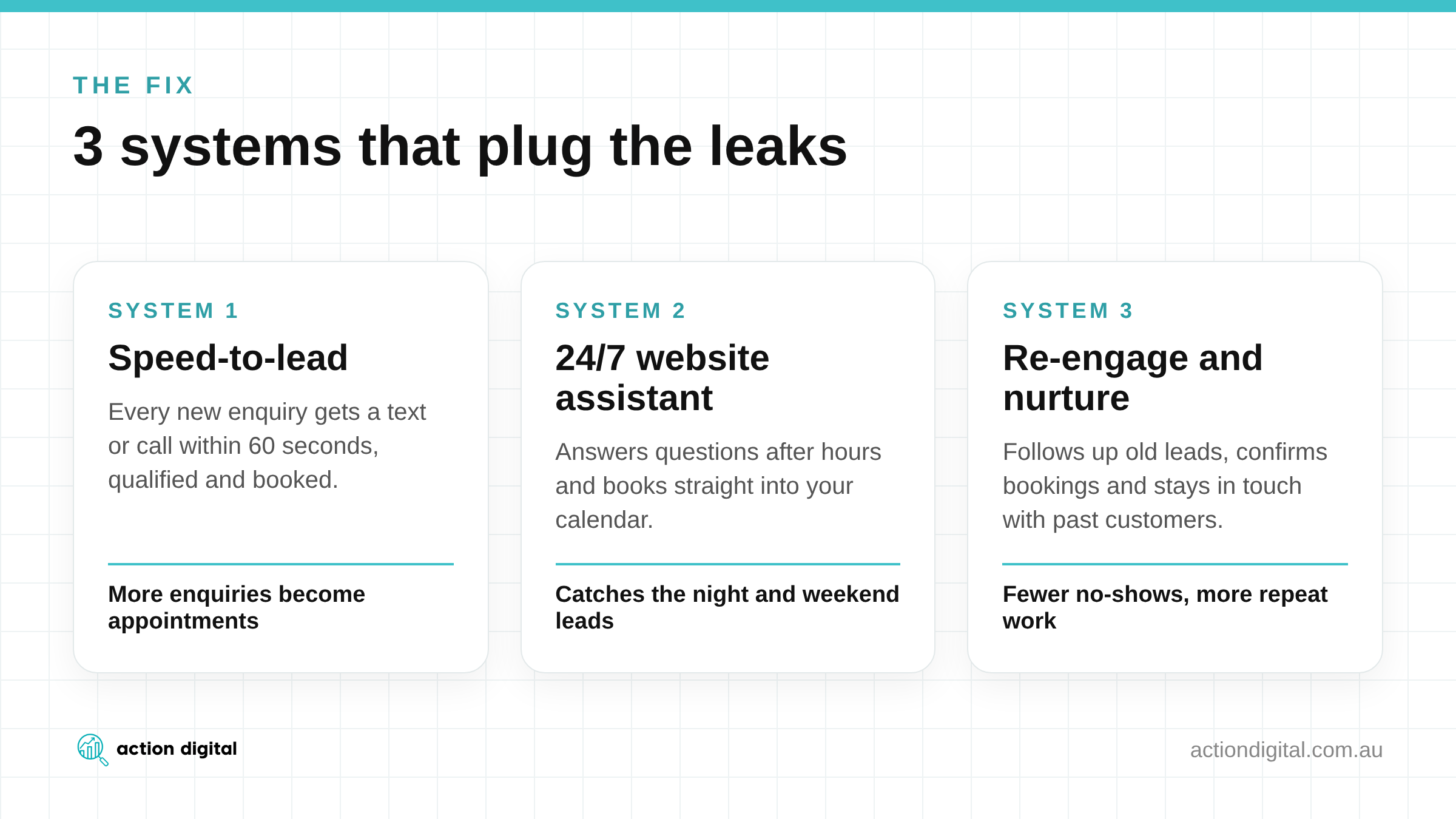
These are the systems we set up as part of our marketing automation work.
System 1: Speed-to-lead
Every new enquiry gets a reply within 60 seconds, day or night.
When a form comes in, an AI assistant sends a text straight away, or calls the lead. It asks a few qualifying questions, adapts to their answers, and books them into your calendar. If they're ready to talk now, it can pass the call straight to you or your team.
Every conversation is recorded and saved to your CRM. So you can finally see how many leads came in, how many booked, how many showed up and how many bought.
System 2: A website assistant that works 24/7
A lot of people do their research at night, after the kids are in bed. If your website can only take a message, you're asking them to wait until morning. Many won't.
A website AI assistant answers their questions on the spot, qualifies them and books the appointment directly into your calendar. Weekends and public holidays included.
System 3: Re-engagement and nurture
This is the one most businesses skip, and it's often where the easiest money is.
The same assistant does 3 jobs across your contact list:
- Re-engage leads who enquired but never booked
- Remind and confirm booked appointments, so fewer people no-show
- Stay in touch with past customers, so repeat work and referrals come back to you
Your contact list is a sales channel. Most businesses just never work it.
Why the 3 work better together
Each system fixes a different leak, and the gains stack.
Speed-to-lead turns more enquiries into appointments. Confirmations get more of those appointments to actually show up. Re-engagement brings back the ones who slipped through. The website assistant catches the after-hours enquiries that would have gone to a competitor.
Improve each step a little and the result at the end is a lot bigger. All from the same ad spend and the same team.
Where to start
You don't need to build all 3 at once. Start with the biggest leak.
A good first step is a simple test. Fill in your own website form, or ring your own number after hours, and time how long it takes to hear back. Then ask your team where your last 20 enquiries ended up.
If the answers make you a bit uncomfortable, that's normal. It's also where the opportunity is.
Find out where your leads are leaking
We run a free Lead Leakage Assessment for businesses that rely on enquiries. It takes about 15 minutes. We'll look at how fast you respond, where leads drop off, and what that's likely costing you each month.
Book your free Lead Leakage Assessment
Want to see how the system works first? Read about our Speed to Lead system.
Sources - Lead Response Management Study, MIT / InsideSales (Oldroyd, 2007) - "The Short Life of Online Sales Leads", Harvard Business Review, March 2011 - Consumer Insights and Perceptions Study 2024, Zoho Australia (401 respondents)


